
It's 1999 Again.
What if something went wrong in culture in 1999, and we’re getting sent back to the future to undo it?


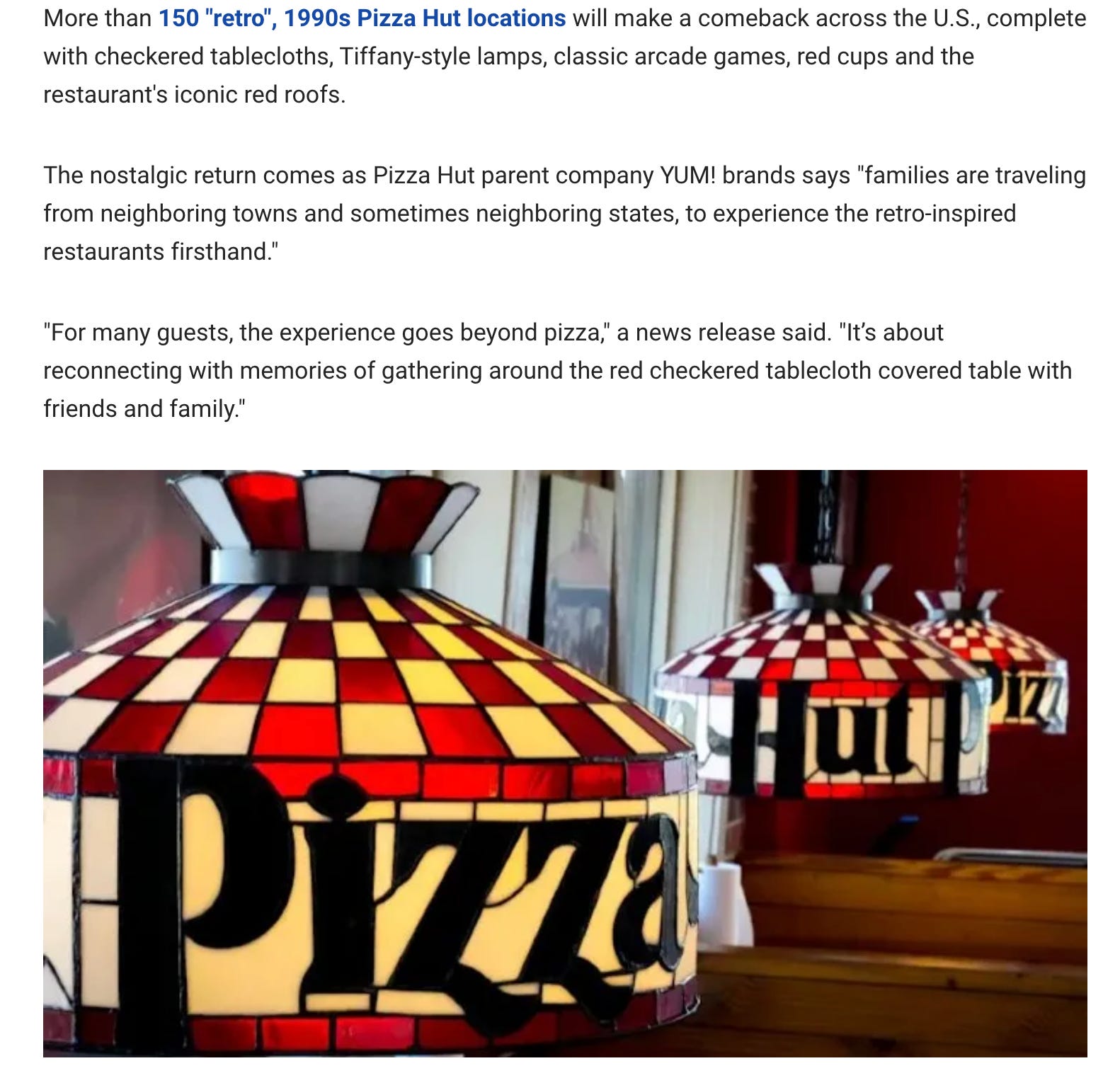
The Knicks and the Spurs are in the NBA Finals. Creed and Limp Bizkit are co-headlining a festival called “The Summer of 99.” Teenagers who weren’t alive at the turn of the millennium are wearing baggy jeans and butterfly clips and calling it “Y2K”, as though it were a genre and not a year that was billed as the end of the world to people my age when we were teens. Classic Pizza Hut is back, people want Blockbuster stores to return, and a new computer technology is changing everything again.
What if something went wrong in culture in 1999, and we’re getting sent back to the future to undo it?
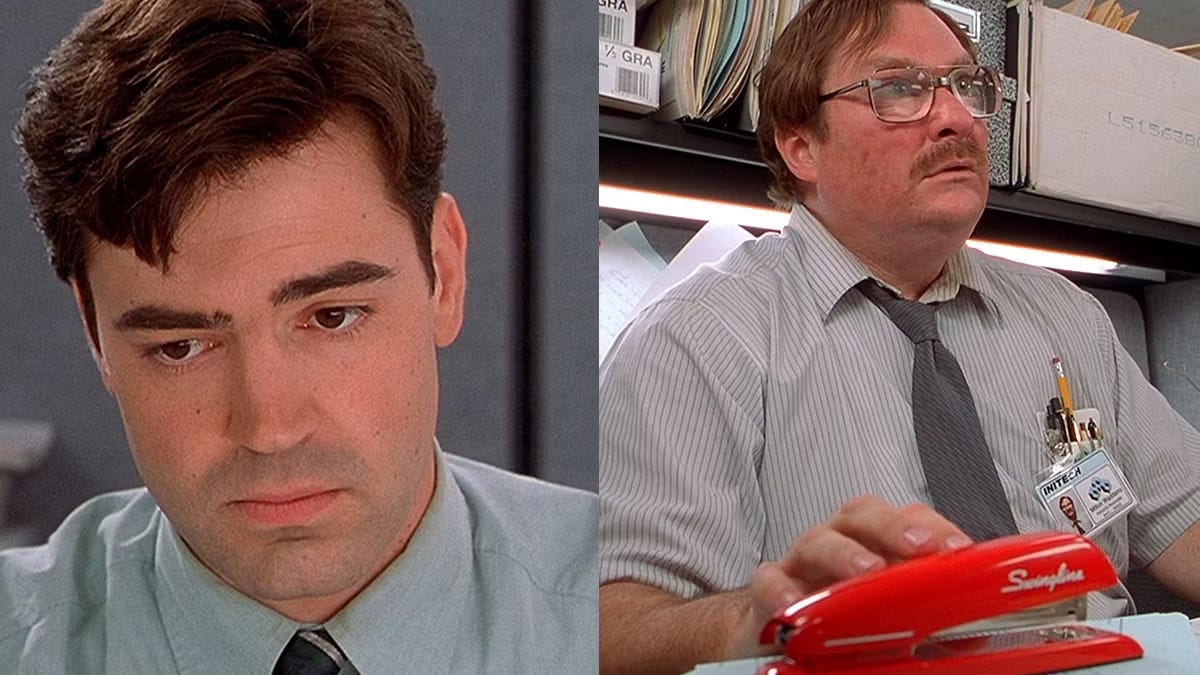
If you were alive back then, I’m sorry, but there is no way to go back and save all of your physical media just before Napster changed the game forever. You can’t undo any college major decisions or career choices influenced by watching Office Space. You can’t save yourself from getting that “tribal band” tattoo on your left bicep.
If you’re a Zoomer nostalgic for the Y2K world you never experienced, what you experienced in your own teenage years—the meaning crisis, the constant pressure to have to “self-author” your own identity, the hypervigilant cringe-detection system that you’ve felt you’ve got to keep running at full capacity always—can be linked to what happened back in 1999.
The Rise of the Anti-Story
The “guiding story” that had been core to the identity of Baby Boomers and older Gen X’ers, and the one younger Gen X’ers and Elder Millennials inherited as children, was fading away. America had won the Cold War. It was supposed to be the “end of history.”
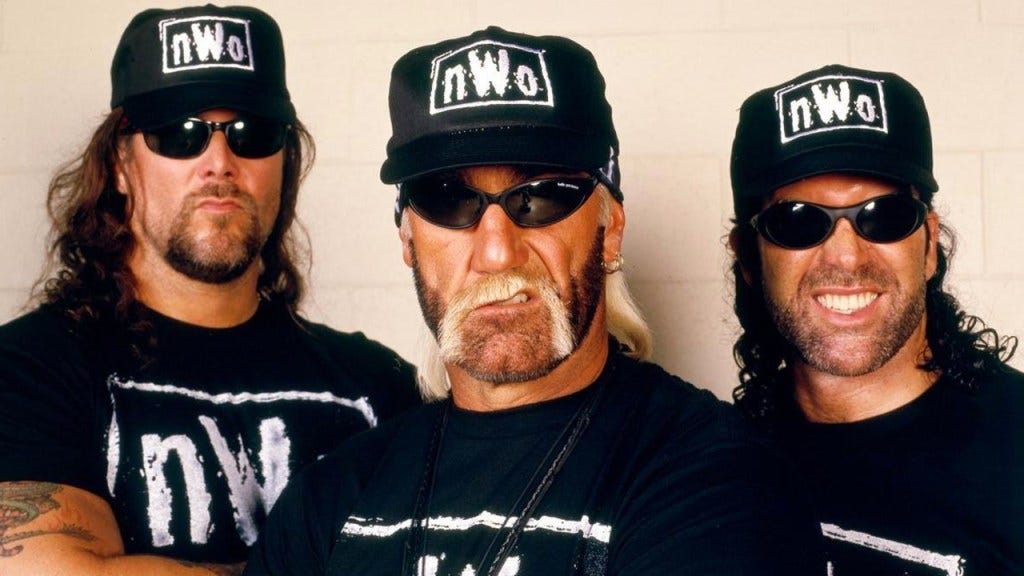
But by the middle of the 1990s, the only thing that looked like it was ending was all that do-gooder sincerity of a Christopher Reeve’s Superman. The epic Rocky training montages stopped showing up in every action movie. Hulk Hogan donned an all-black “New World Order” t-shirt and turned “heel.” Teenage boys in the suburbs were raising a fist in the air chanting, “F*ck you! I won’t do what you tell me!” along with the band Rage Against the Machine.
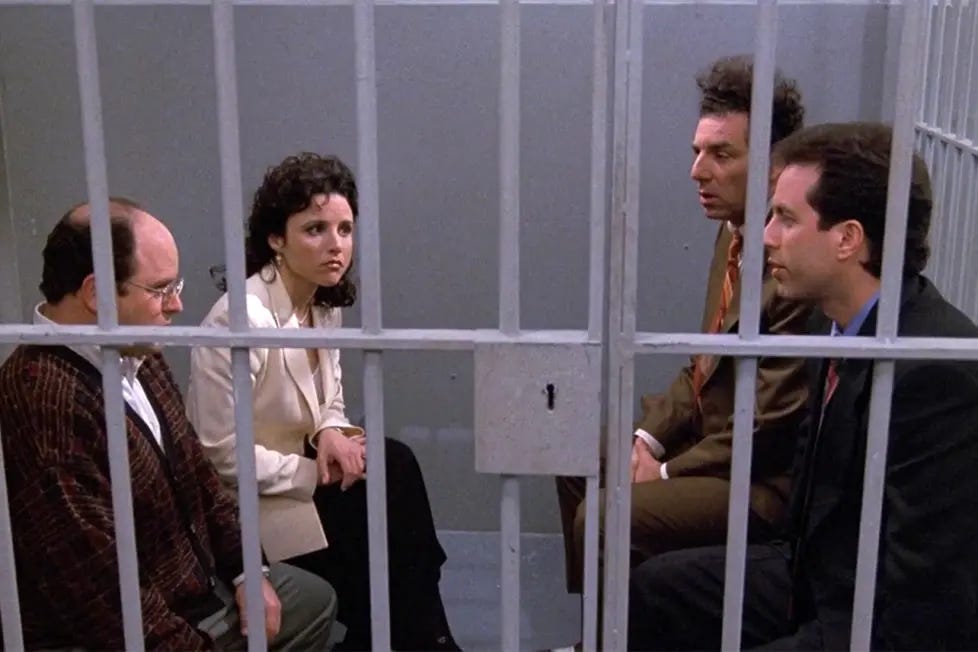
All that syrupy “we are the world…we are the children” stuff had gone the way of the dinosaur. Cynicism was the new language of a new anti-story moving through popular culture. People were turning off the morality plays that had long been disguised as “situational comedies” and turning to a “show about nothing” that was drenched in irony. Soon their lives bore the markings.
Our Descent into the Meaning Crisis
Our church pews were beginning to empty, too. In the previous guiding story—the “Modern Story”— ”religion” was a personal, private endeavor that probably had some social utility in making more moral American citizens who wouldn’t devolve into godless Soviet Communists. But in this new anti-story, “religion” was deemed a tool of oppression. Church was another system of control to rage against. The stories it told you were just propaganda masking a play for power.
In fact, the anti-story taught that all guiding stories that attempted to give you a sense of what reality is all about and what your place in it is were just power plays.
1999 asked us a question. It presented to us two pills and asked, “Either disbelieve everything or go back to sleep as a naive, docile sheep. Which one do you pick?”
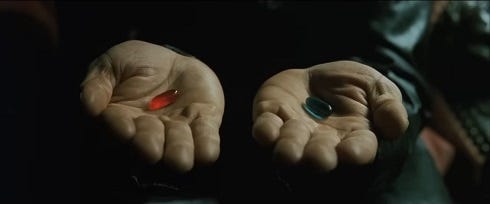
We grabbed the red pill. Presented with that binary, who wouldn’t? But man, doesn’t it feel like we might have got “black pilled” instead?
What if 1999 is coming back into the zeitgeist today because we got something wrong in that moment? What if the question we were asked in 1999—disbelieve, deconstruct, tear it all down, or remain a naive fool—was a false binary?
What if “all guiding stories mask a play for power” was itself a guiding story…and one that handed us a meaning crisis instead of liberation?
What if the way out of the pervasive sense of despair and fragmentation isn’t to keep disbelieving all stories or to “self-author” your own story?
What if the apocalyptic visions our culture just can’t shake—the vision of Mad Max, zombie hordes, and AI overlords—are warning that there is still time to course-correct, but the hour is getting late?
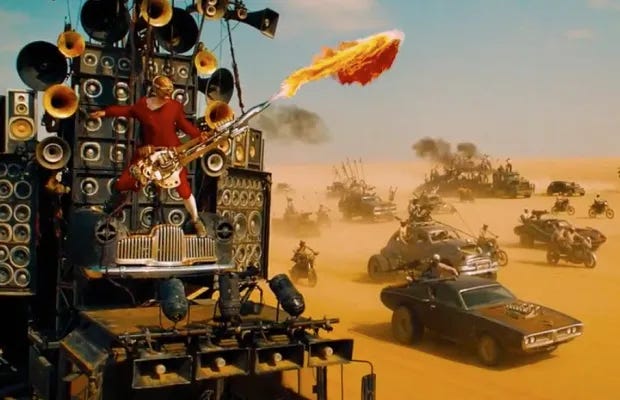
In 1999, we wanted to break free from a story that was ultimately insufficient in fulfilling our innate longing for meaning and couldn’t save us from these dystopian nightmares of civilizational collapse, but we accepted another broken story in its place.
We can’t really go back in time and change 1999, but maybe the signs of our times might be calling us to see now what we could not see then, so that we can change our future and “re-story” our culture.
Am I optimistic? No. I’m hopeful. There’s still time.
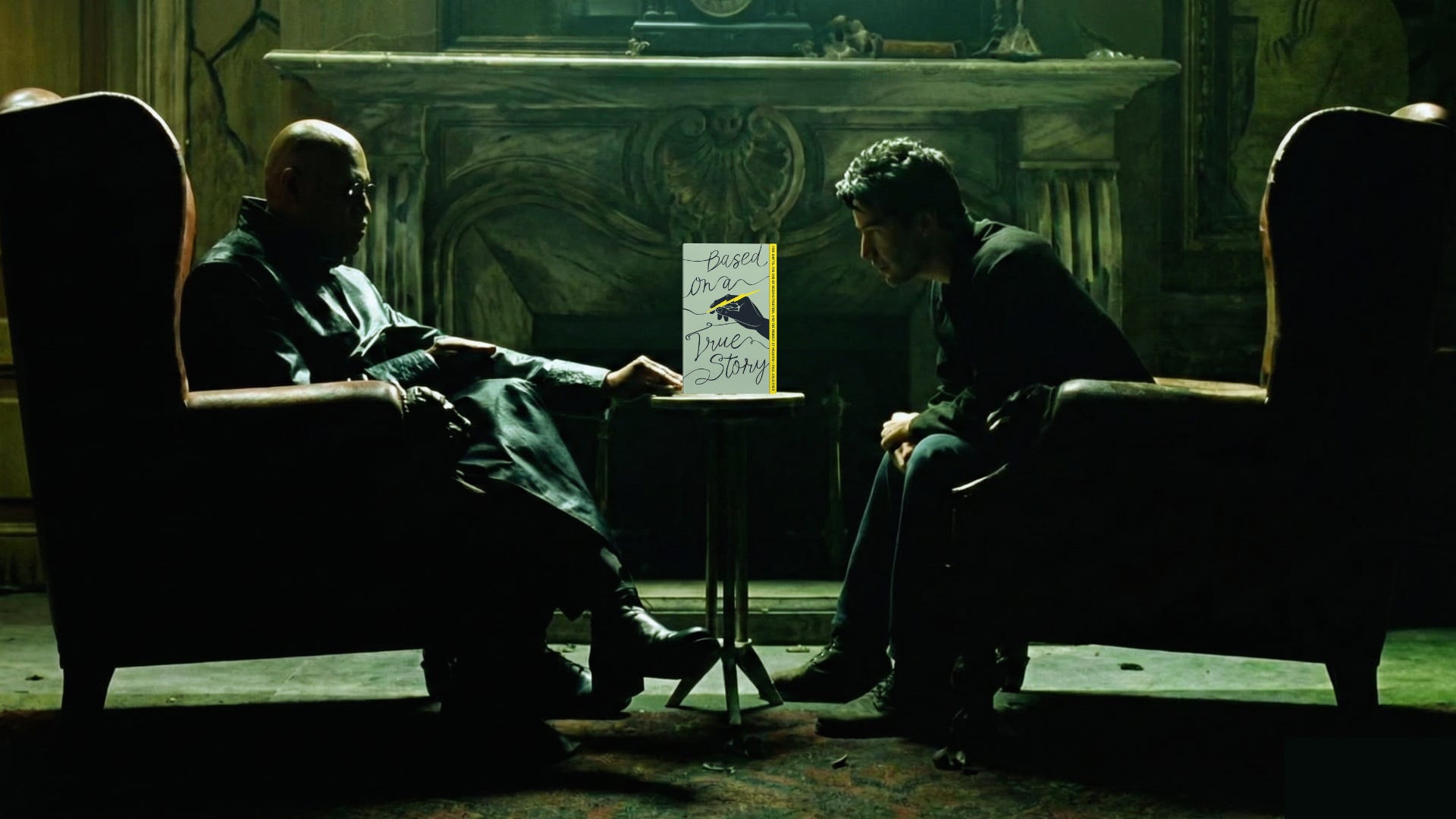
1999 is where chapter 1 begins in Based on a True Story: Vibe Shifts, the End of Deconstruction, and the Reboot of Meaning. It will be out in a few short weeks, and I can’t wait for you to read it.
Order your copy here
It's funny you bring up the NWO in 1999, because by 1999, WCW relied too much on the NWO to the point where this and some genuinely bad creative decisions led to 1999 WCW being unwatchable leading to its downfall.
Also, perfect timing given Ryan Burge's recent post about Gen Z being the least trusting generation, no doubt the result of what you have been writing about. Fortunately, to quote Luke Burgis, who has his own book The One and The Ninety Nine coming out soon,
" I'm convinced that Hope is the most important virtue of our time—not merely human hope, but something greater. Hope has as its object a future, arduous, and possible good. But in its merely human form, that devolves into being a "definite optimist." Theological hope has as its object eternal life, and trusts in the promise of God's word. That does not imply any lack of effort in work or even in optimism, but those things have a totally different aim in the context of hope.Definite Optimists are fine, but we could use more Definite Hopers."
Please consider having @LukeBurgis and Ryan Burge on your Goodmakers podcast.
surreal how history repeats. sometimes i wanna be that naive trusting person and go back to sleep. its hard to disbelieve everything somtetimes.